Affordable Online School for Kids: A Guide to Self-Paced Primary Education
An affordable online school for kids should give your child a clear learning path, useful practice and a schedule your family can maintain. For parents comparing online primary education, the monthly fee is only one part of that decision. You also need to know what your child will do each day, how understanding is checked and how much support you will provide at home.
This guide helps families in Pakistan, the UAE, Saudi Arabia, Qatar, Oman, Kuwait, Bahrain, Afghanistan and other countries compare self-paced online learning for children. Start with your child’s current skills, your household budget and a demonstration of a real lesson.
What is a self-paced online school?
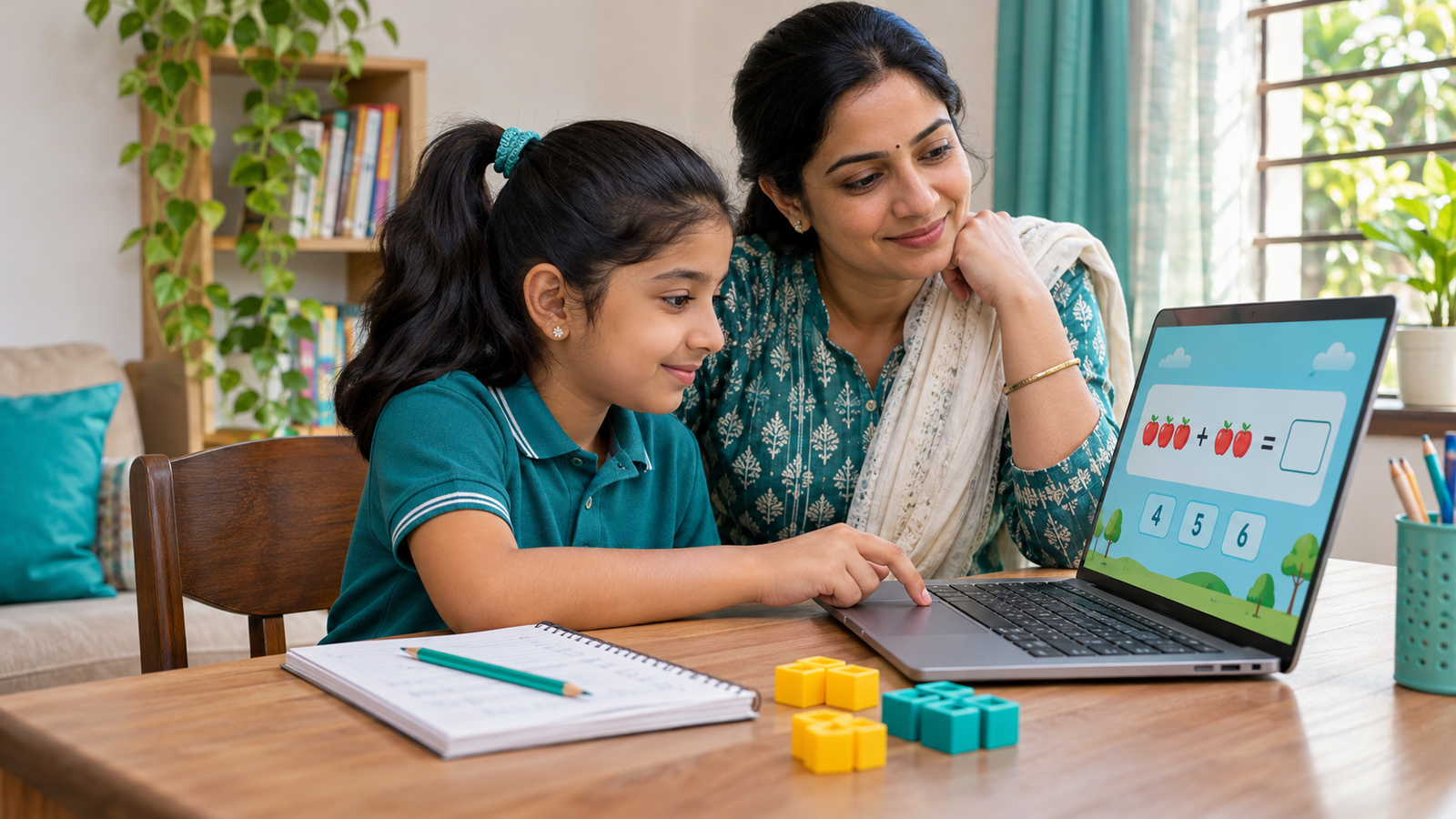
In self-paced online schooling, children work through a planned sequence of lessons and activities at a pace suited to their understanding. A learner can revisit an explanation, practise a skill and complete a related quiz before moving forward. Parents help establish routines and notice when extra explanation is needed.
When comparing programs, ask to see the whole learning sequence. A useful demonstration shows the introduction, explanation, practice, assessment and next step. Look for a clear reason behind each activity and feedback that helps your child decide what to practise again.
How to compare affordable online schools for primary children
1. Check what the fee includes
Ask for the total cost for your child’s class and chosen subjects. Confirm whether quizzes, learning materials, progress reports and support are included. Check payment frequency, currency, renewal terms and any charges for additional children.
Build a household budget that includes internet access, a suitable device, printing and any books or supplies you expect to use. A low monthly subscription becomes easier to assess when you can see the full cost of learning at home.
2. Look for a structured curriculum
A primary school curriculum needs a sensible progression. For example, a child learning multiplication benefits from understanding equal groups and repeated addition before tackling multiplication stories. Ask the provider how a new learner’s starting point is chosen and how earlier skills can be revisited.
For online English lessons, examine reading, vocabulary, comprehension and opportunities to write. For online maths lessons, look for explanations, worked examples, practice and questions that ask children to apply an idea.
3. Try a lesson and its quiz together
Watch how your child responds to a sample activity. Can they follow the instructions? Can they replay the explanation? Does the quiz assess the skill that was taught? Ask what happens after an incorrect answer and whether there is a way to review difficult topics.
A quiz result is a starting point for a conversation. Ask your child to explain one answer, draw a model or show the same idea with household objects. This gives you another way to check understanding.
4. Understand the parent’s role
Younger children often need help logging in, reading instructions, organising materials and returning to a task after a break. Before enrolling, ask how much daily supervision is expected and what help is available when a child gets stuck.
Choose a routine that fits the adult support available in your household. If you need regular teacher guidance, ask about the timing, format and cost of that support.
5. Check that it fits your location and plans
For a family living abroad, practical questions include payment currency, time zones for any scheduled support, language of instruction and access during travel. Families considering a future move should also ask what progress records they can obtain.
If you intend to use a program for full-time schooling, check the schooling requirements that apply where your child lives and ask any future receiving school what records it requires. Confirm recognition or examination arrangements directly with the relevant authority or institution.
A sample daily routine for self-paced learning at home
Use the following as a flexible example. Adjust the length and difficulty to your child’s age, attention and learning needs.
| Part of the routine | What to do | What a parent can observe |
|---|---|---|
| Set a goal | Choose one clear skill to work on. | Can the child describe today’s task? |
| Complete a lesson | Follow the explanation and revisit difficult parts. | Which instructions need help? |
| Practise offline | Write, draw, read aloud or use objects. | Can the child show the idea another way? |
| Take the related quiz | Answer independently where possible. | Which mistakes need review? |
| Review and pause | Discuss one success and one next step, then take a break. | Is the next goal manageable? |
Build reading, handwriting, movement, play and conversation into the wider day. When a child struggles repeatedly, make the next task smaller and seek additional guidance where needed.
How V Online School supports learning at a child’s own pace
V Online School describes a structured pathway of concept lessons, related quizzes and a Grand Assessment. Passing a lesson quiz moves the learner forward. Its self-paced option lets families work through that system on a flexible schedule, with progress available through the dashboard. The school also lists teacher-guided group and individual options. Explore the online learning system and ask to see the class that fits your child.
What does the self-paced option cost?
As checked on 9 November 2026, the published standard self-paced fee is PKR 3,000 per month for Pakistan and US$30 per month outside Pakistan. The fee page lists no registration or admission fee and describes concessions subject to school review. Confirm your applicable fee and access details before payment. See the current online school fees and concession terms.
Questions to ask before enrolling
- Which class and subjects are suitable for my child’s current skills?
- Can we see a complete lesson and its related quiz?
- How are difficult topics reviewed?
- What does the parent need to do each day?
- What support is included in the selected plan?
- Which devices and connection are needed for the activities?
- What progress records can we access?
- What is the full cost and how does renewal work?
Frequently asked questions about online schooling for kids
Can primary school children learn online at their own pace?
Self-paced lessons can give children time to revisit explanations and practise. Primary learners still benefit from an adult who helps organise the day, checks understanding and arranges further support when necessary.
How do I find a low-fee online school?
Compare the total cost for the same class, subjects and support level. Request a sample lesson, inspect the curriculum sequence and ask exactly what the fee includes before choosing a plan.
Can families outside Pakistan use V Online School?
The school publishes an international fee option. Families in the Gulf, Afghanistan and other countries can contact the school to confirm the suitable class, payment arrangements and support available for their location.
What if my child needs more time on a topic?
Review the explanation, practise the skill in a different way and check the result again. Ask the school what revision and support options are available before deciding on the next lesson.
How can I compare self-paced learning with live classes?
Think about your child’s need for direct explanation, your available supervision and your family’s timetable. Read our self-paced versus live online classes guide, then ask the school to explain how each option would work for your child.
Explore an affordable online education for your child
Choose a class to explore, review a sample lesson and discuss the support your child needs. To ask about self-paced primary education, current fees or enrolment, use the contact page or email contact@vonlineschool.com. Share your child’s age, current class and country so the school can help you identify the next step.

You may also like
Online School in Pakistan: Fees, Curriculum and a Parent’s Checklist