Grade 5 Homeschooling: What Children Learn and How to Succeed
Grade 5 homeschooling can help children bring reading, writing, mathematics and investigation into more independent work. For parents comparing Grade 5 online classes, the key is whether a program makes the expected skills clear and provides a way to check understanding before moving forward.
This parent guide explains the significance of Grade 5, the skills your child will work towards and practical ways to support connecting knowledge before the next stage of study. It is based on V Online School’s published Grade 5 learning outcomes. Suggested home activities below are examples for families, rather than additional promised school services.
Why Is Grade 5 Important?
This grade offers an opportunity to make foundational skills more secure while asking children to organise longer tasks. Summarising a text requires selecting important information. Converting fractions and decimals requires recognising a relationship. Explaining a body system requires connecting parts and functions. These habits support the more abstract work of later grades.
What English outcomes should parents expect?
The school’s published Grade 5 outcomes include summarising main ideas, identifying details, formal letters and essays of 100–150 words. Direct and indirect speech, figurative language, discussion and simple debates extend communication. A child’s gain should be visible in selecting relevant points and expressing them clearly, rather than copying a passage or stretching writing to meet a word count.
What maths is important in Grade 5?
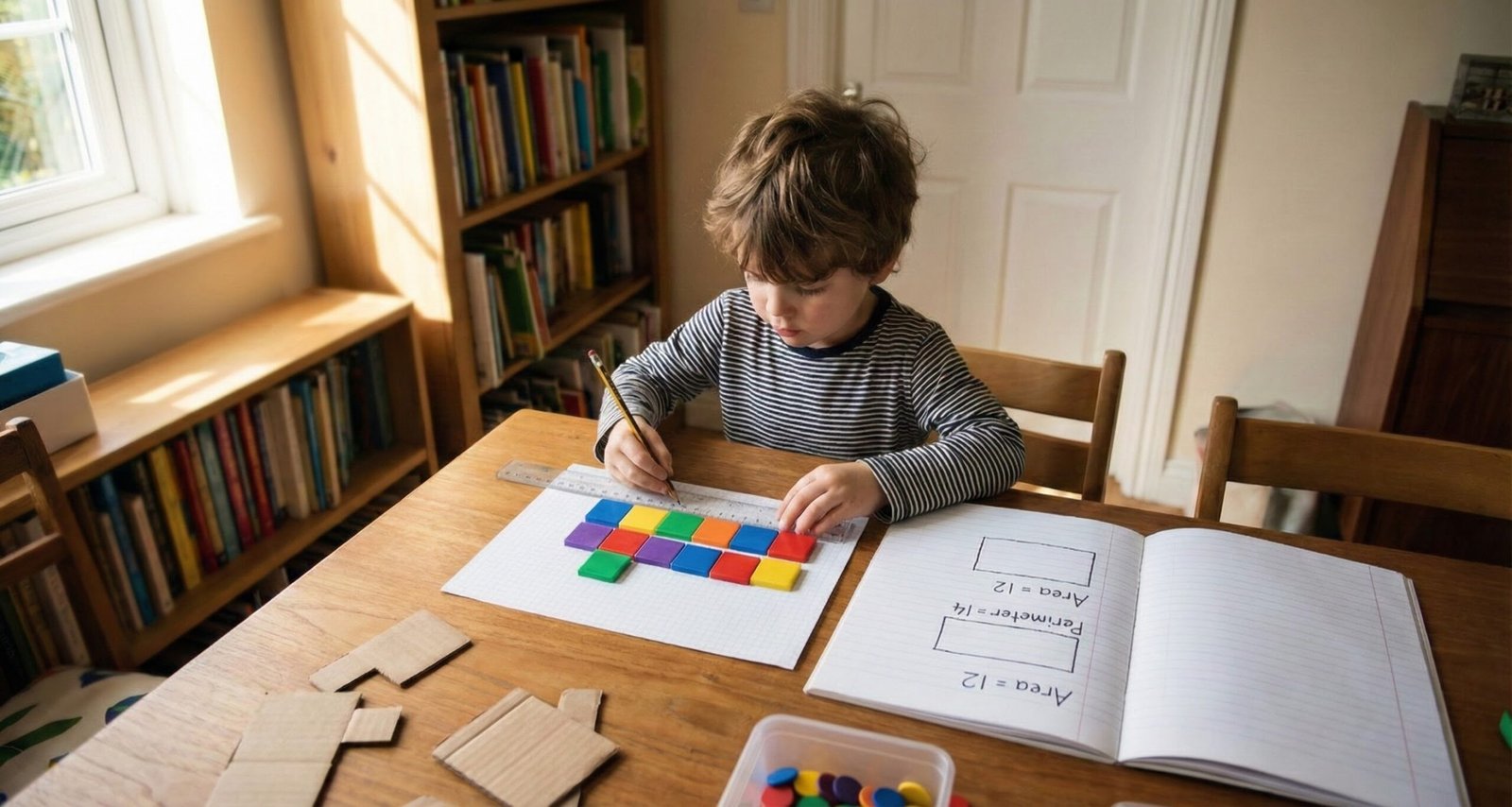
The pathway covers larger-number operations, least common multiples, highest common factors, fractions and decimals, percentages, shapes, measurement and simple probability. Ask children to explain when a percentage is useful or why a conversion is equivalent. Area, perimeter and volume should be discussed as different measurements, with units that match the problem.
How do science and digital projects build skills?
Science includes body systems, conservation, forces, rocks, cells, classification and weather. STEAM outcomes include presentation features, basic spreadsheet charts, coding for step-by-step problem-solving and online file collaboration. Art and weaving offer practical creative work. These areas can help a learner organise information, choose a useful representation and explain what it shows.
How Can My Child Succeed in Grade 5 at Home?
- Summarise reading in a few original sentences before discussing extra detail.
- Practise fractions, decimals and percentages as connected representations.
- Divide a longer task into planning, completing, checking and explaining.
- Use a simple chart to discuss information rather than decorating a page.
- Ask for feedback on a specific learning outcome and revisit the work after feedback.
Use the plan flexibly. If a task is consistently too difficult, bring examples to the school and identify the missing skill. Finishing a lesson and understanding its learning outcome are related, but they are not identical.
What Does Learning Look Like in Practice?
Create a household recycling tally without recording personal information. Ask the child to make a simple chart and write a short explanation of what could be reduced or reused. This optional activity connects conservation, data presentation and purposeful writing.
How V Online School Teaches and Assesses Grade 5
Each concept has a structured lesson followed by a related quiz. Passing that quiz moves the learner to the next lesson. After all lessons in the sequence, the learner completes the Grand Assessment. Performance is reflected in a grading system based on learning outcomes and skill-based assessment, including understanding and application.
The same learning pathway is available through three options:
- Self-Paced Individual Learning: the child follows the system at their own speed, with the home support they need.
- Live Online Group Class: a teacher coordinates the group on Zoom, shares the system lessons and quizzes on screen and explains concepts.
- One-to-One Tuition: a teacher guides one learner through the same lessons and quizzes on Zoom, with individual explanation and practice.
Compare these options in our self-paced versus live online classes guide. Choose according to the learner’s needs, available support and family routine. Ask about actual session arrangements instead of assuming that every option has the same timetable.
Grade 5 Homeschooling Questions Parents Ask
How can my child prepare for Grade 6 at home?
Review reading comprehension, independent writing, number operations and fraction understanding. Discuss any uneven skills with the school rather than assuming that completing Grade 5 pages guarantees readiness in every subject.
Should a Grade 5 child do every task alone?
Encourage the child to attempt work and explain difficulties, while remaining available for guidance. Independence develops through appropriate support, clear routines and feedback rather than withdrawing help.
How much do Grade 5 online classes cost?
Fees depend on the chosen learning option and applicable category. Check the current fee structure for amounts, currencies and renewal rules. This keeps your decision based on current information.
Explore Grade 5 and Plan the Next Step
Review the full Grade 5 subjects and learning outcomes, compare fees and contact the school about your child’s starting point. Registration gives immediate dashboard access. Pay the applicable fee and upload the receipt; the school manually reviews it before granting class access. Monthly plans require renewed payment and a new fee slip.
Success starts with a clear next learning goal, purposeful practice and support when it is needed. Use what your child can explain and apply to guide the next step.

You may also like

Grade 10 Online Homeschooling: Learning Goals, Success and Next Steps

Grade 9 Online Homeschooling: Subjects, Study Success and Exam Planning