Nursery Readiness: 7 Learning Skills to Build Before Grade 1
Education news and parent guide · Updated 24 November 2026
UNESCO announced the launch of the 2026 Global Report on Early Childhood Care and Education for World Children’s Day, 20 November. Its announcement places early learning, inequality and access to quality provision at the centre of the discussion. Read the source announcement.
What does nursery readiness involve?
Nursery readiness means helping a young child participate in learning with appropriate adult support. It includes communication, curiosity, routines and early understanding, alongside letters and numbers. It should not become a race to finish Grade 1 content before the child has had time to explore, play and ask questions.
The UNESCO announcement provides the news context; the activities below are practical family suggestions, not a diagnostic checklist or a summary of unpublished report findings. Children develop differently. Discuss individual concerns with an appropriate early-years professional rather than using a blog to label readiness.
1. Listening and responding
Read a short story or give a simple instruction during an ordinary activity. Ask the child to show or tell you what comes next. Keep the language clear and allow time to respond. If an instruction is difficult, break it into smaller steps rather than repeatedly asking the child to concentrate harder.
2. Talking about everyday experiences
Invite the child to describe a drawing, a meal or something noticed outside. Model a fuller sentence without demanding a performance. In multilingual homes, rich conversation in a familiar language can help adults understand the child’s ideas. Ask the school how it supports the language used for teaching.
3. Enjoying books and noticing print
Let the child choose a picture book and talk about the illustrations. Point out that print carries meaning and show how a book is handled. Ask what might happen next. Recognising some letters can be useful, but enjoying and understanding a shared story should not be replaced by repeated alphabet testing.
4. Counting with meaning
Use a few everyday objects and move each one as you count. Ask for a small number of items or compare two groups. Notice whether the child connects the spoken number with the quantity rather than only reciting a sequence. Keep activities playful and adjust the challenge when the child becomes tired.
5. Sorting, noticing and explaining
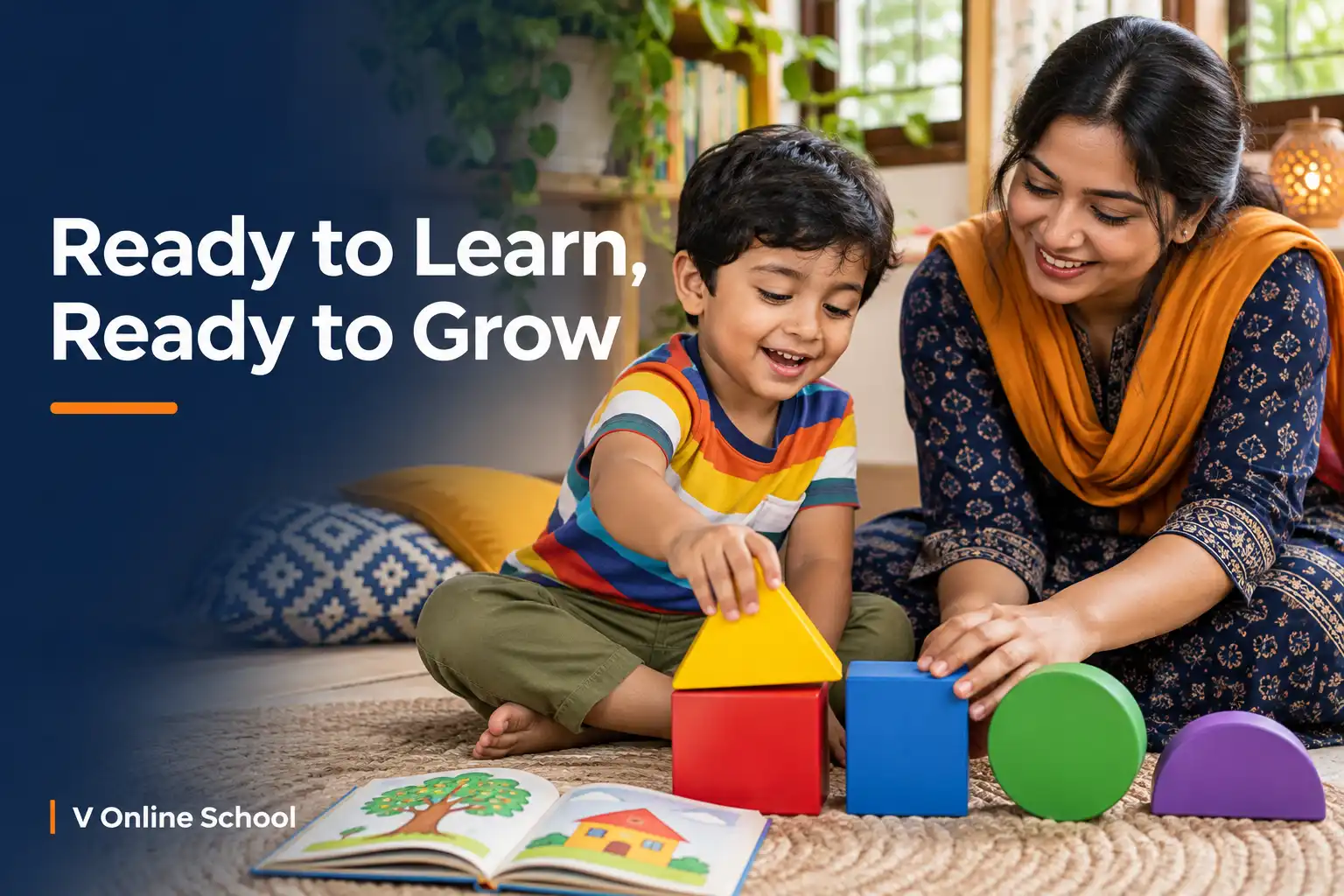
Group objects by colour, shape, size or purpose. Ask the child to explain the grouping in their own words. There can be more than one sensible answer. These conversations offer practice in observation and reasoning without needing a worksheet or a new set of teaching toys.
6. Taking turns and asking for help
Play a brief turn-taking game and model how to ask when something is unclear. Practise a simple routine for starting and finishing an activity. These skills develop with patient support. A young learner should not be expected to manage an online lesson, device and instructions independently from the first day.
7. Creating and moving away from the screen
Include drawing, building, pretend play and ordinary movement in the day. Digital material can be one part of a broader routine. When using an online lesson, stay involved and connect the idea to an activity away from the screen. For example, follow a shapes lesson by finding shapes in safe household objects.
Choosing an online nursery programme
Ask about the age range, adult supervision expected, subjects, lesson format and assessment approach. At V Online School, the general pathway uses concept lessons followed by related quizzes and a Grand Assessment, with learning outcomes and skills informing grading. Contact the school to discuss whether the relevant nursery arrangement suits your child. Do not assume that longer screen sessions or faster lesson completion represent better early learning.
Frequently asked questions
Must a child read independently before nursery?
Requirements vary by setting. Ask the school directly; build shared reading, conversation and curiosity rather than assuming independent reading is universal.
Can online nursery replace adult involvement?
Young children need active adult support. Confirm what the programme expects at home before enrolling.
How should parents judge progress?
Notice growing participation, clearer explanations and greater independence in suitable tasks, alongside the teacher’s feedback.
Explore the right learning option for your child
See our grade subjects and learning outcomes, compare current fees and learning options, or contact V Online School to discuss suitability. Our Islamabad support team is available 9 am–9 pm Pakistan time, with a maximum reply time of 24 hours.

You may also like

Kuwait Book Fair 2026: 7 Ways to Build a Child’s Reading Habit

Online Teacher Qualifications: 7 Questions Parents Should Ask